
Barry County Police Blotter Sources
Barry County publishes no 72-hour arrest list, weekly log, or multi-day booking blotter. The sheriff's Inmate Lookup page sends a named-person custody search to VINELink rather than a dated roster. The county site also stays quiet on practical details. There is no stated archive depth, update rhythm, photo rule, or roll-off policy for jail records. Barry does offer selected public-safety news and historical newspapers, though neither covers every arrest made in the county.
One caution applies to those editorial sources. A story's date rarely matches the actual arrest or booking time, and older reports can keep a stale account on the page after custody changes. Treat each source and date as tied to the one fact it supports.
Read Barry Police Reports Carefully
Start with the publisher and the source line. Attribution matters. WBCH may credit the Sheriff, Michigan State Police, Central Dispatch, Hastings, or another local agency, which tells you where a Barry County report began rather than who decided the case.
- Note the article date and any separate incident, arrest, or booking date.
- Identify the agency credited with the account and the place involved.
- Describe charges as charges and preserve the outlet’s attribution.
- Use VINELink or the jail for current custody because a story can become stale.
- Check MiCOURT or the court file for a later disposition.
Never merge a VINE status, a police release, a news article, and a court register into one synthetic log. Each record answers a different question. For only the newest arrests, use the Arrests Last 24 Hours workflow.
Barry Blotter Fields and Limits
There is no standard Barry County blotter row to inventory. A selected article may carry some arrest details while an agency booking record holds others, so treat any missing detail as unknown.
| Possible detail | How to read or verify it |
|---|---|
| Name | Check spelling and identifiers because common names can cause false matches |
| Story date | May differ from incident, arrest, and booking dates |
| Agency source | Shows who supplied the account, not who resolved the case |
| Alleged charge | A preliminary claim requiring later court verification |
| Custody or release | May be stale by publication; check VINE or the jail |
| Photograph | Story imagery does not prove an official booking photo is publicly available |
Want exact jail-side fields? Request the booking card or inmate-jacket material. Ask for the booking number, arrest and intake times, arresting agency, charges as recorded, bond, release or transfer details, and photograph only as needed, since Barry County promises none of those fields online.
No Barry Weekend Posting Rule
Barry County follows no published weekend, holiday, or Monday batch rule. Inferring a booking surge from a few stories would be inaccurate. Borrowing another county's schedule would too. Newsrooms pick stories by editorial judgment, while the jail processes arrested people as events occur. A quiet archive day proves nothing. A busy news day proves nothing either.
For a defined weekend, request the relevant Sheriff booking or control-center log and state the exact dates. A bounded request beats counting headlines every time.
Note: No sourced Barry cadence supports claims about nightly updates, Monday dumps, or holiday delays.
Barry Arrest Archives and Retention
Michigan's GS-11 schedule sets the retention clock. Jail booking and control-center logs are kept through the end of the calendar year. Then seven more years follow. Inmate jackets run longer: until release plus ten years. A jacket may hold intake records, booking cards, mug shots, bonds, warrants, and release documents. Retention still does not guarantee every item exists or opens without redaction.
Start a recent request through the Sheriff's FOIA page. Give the name, date range, incident number if known, and record series. Ask for separable public parts when an exemption applies. The Barry County recent arrests hub maps the broader custody, court, and records paths.
Barry Public-Safety News Archives
WBCH News carries selected public-safety stories from Hastings and the wider county. Its reports may cite the Sheriff, MSP, Central Dispatch, or city officials. That makes it useful for a reported event. It is not a source for a full booking list or mugshot gallery. For older newspaper material, turn to the Hastings Public Library digital collections page.
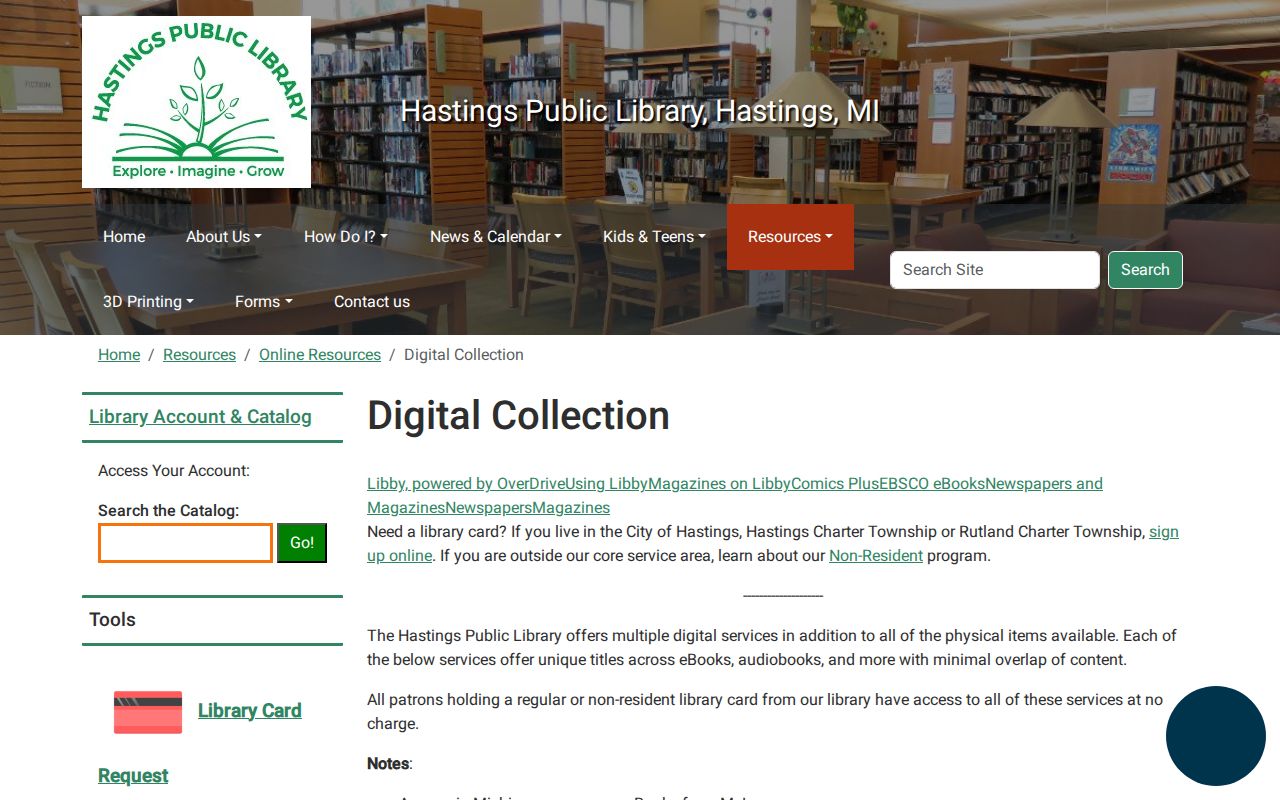
The captured archive gateway supports historical article research, not live custody confirmation.
Historic Barry Arrest Reporting
The Barry County History Portal preserves a Hastings Banner collection. It can help you locate older police, court, and jail reporting from Barry County.
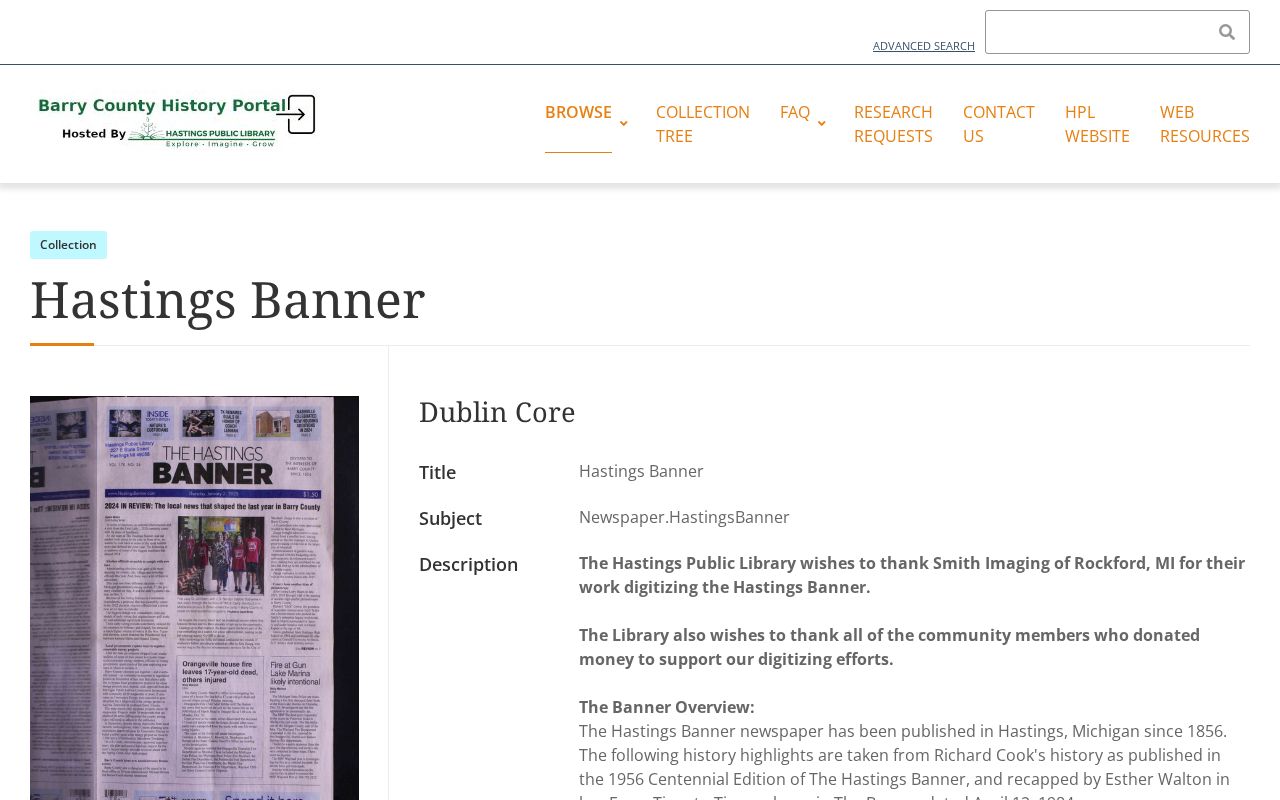
Treat that collection as dated historical context, not a current arrest ledger. Other library material includes the Nashville News, Sun & News, and related local titles. Their coverage is selective. The Archives of Michigan county guide also identifies a Barry "Record of jail" covering 1873 through 1911. It sits under RG 67-41. Modern local files do not migrate there automatically. Send recent arrest requests to the Sheriff, and route older state-held questions to Archives staff.
Barry Arrest Reports Need Outcomes
A charge reported near an arrest rarely tells the whole story. Prosecutors may file different charges. A court can also dismiss, reduce, divert, or resolve the matter by plea or trial. That is why the outcome lives in the court record. MiCOURT offers public case information for Barry County. It excludes some nonpublic matters, though, and it is not a live jail roster.
Spotted a factual error in a story? Send the publisher the exact link plus the official record that shows the mistake. Errors inside an agency's own records go back to that agency. A court outcome can justify an update. It cannot turn an article's date into a booking timestamp.
Keep booking records and arrest reports separate, too. The jail builds its intake file once an arresting agency brings someone in for processing. The police department writes its own incident and arrest report. Court events come later: arraignment, charges, pleas, dismissals, trials, sentencing. So route each request to its source. Police reports go to the arresting agency. Booking material goes to the Sheriff. Case outcomes come from the court that handled the matter.
Custody searches have their own quirks. Released people can drop out of a current search. Their booking and court records still exist. State prisoners and anyone under MDOC supervision belong in OTIS, not a county news archive. Federal custody requires a federal source. That is why one name can return different answers, and no source is necessarily wrong.
Request a Barry Booking Log
A strong FOIA request names the date window and the record type. Ask for the Barry County Jail booking or control-center log covering specific days. Avoid a vague plea for "all arrest information." Add a name only when the request centers on one person. Name the arresting agency when you know it. Tight limits make the custodian's search easier. They can also trim review work and cost.
Barry County wants enough incident detail to locate a report. Its page notes a fee may apply but lists no special booking-log or photo price. Michigan FOIA lets a public body review the request. It may apply lawful exemptions and redact protected content. Nonexempt portions still get released. Juvenile, victim, medical, and active-investigation material may need special handling.
Once the log arrives, resist a simple comparison to news coverage. Not every log row became an article. Editors pick a small slice of events. News can also cover an investigation or warrant. It can be a court hearing or public warning. None of that ever became a jail booking in that range.
Check the response against the request itself before assuming a gap. A date-bounded log may run on booking time, not arrest time. An event near midnight can land outside the expected day. Transfers and warrant pickups can split the arrest date from jail intake. Ask the custodian which date field controls the list. Request a narrow adjacent range for boundary events. Keep the agency's field labels rather than renaming them as news categories.